



Many people reach a point where their skincare routine suddenly stops delivering results. Products that once worked well now feel ineffective. Skin becomes dry, sensitive, dull, or unpredictable—even with consistent use of moisturizers, serums, and treatments.
This is often not a product issue. It is a skin barrier issue.
The skin barrier is the outermost protective layer of the skin, responsible for locking in moisture and defending against environmental stress. When it becomes weakened, even high-quality skincare products cannot function properly.
What Is a Weak Skin Barrier?
A weak or compromised skin barrier occurs when the protective outer layer of the skin is damaged or disrupted. This leads to increased water loss and reduced protection against irritants, pollution, and bacteria.
Common signs include:
- Persistent dryness or dehydration
- Skin sensitivity or redness
- Burning or stinging when applying products
- Rough or uneven texture
- Breakouts or irritation from products that were previously well tolerated
When the barrier is compromised, the skin loses its ability to maintain balance, making even basic skincare feel ineffective.
Why Your Skincare Suddenly Stops Working
A weakened skin barrier changes how the skin responds to products. Instead of absorbing beneficial ingredients effectively, the skin becomes reactive and unstable.
Key reasons include:
1. Moisture loss (dehydration cycle)
When the barrier is damaged, water escapes more easily from the skin, leading to chronic dehydration. This makes hydrating products feel less effective over time.
2. Increased sensitivity
The skin becomes more reactive to active ingredients such as acids, retinol, or even fragrance-free moisturizers, causing discomfort or redness.
3. Reduced absorption efficiency
A disrupted barrier affects how well skincare ingredients penetrate and function, lowering overall product performance.
4. Environmental stress accumulation
Pollution, UV exposure, air-conditioning, and lifestyle stress continuously weaken the barrier, preventing recovery even with consistent skincare use.
What Actually Helps a Weak Skin Barrier Recover
Repairing a compromised skin barrier requires a shift in approach. Instead of increasing product complexity, the focus should be on restoring stability.
✔ 1. Simplify your routine
Reduce active ingredients and focus on calming, hydrating formulations.
✔ 2. Strengthen moisture retention
Use products that help prevent water loss and maintain hydration balance.
✔ 3. Avoid over-exfoliation
Excessive exfoliation delays barrier recovery and increases sensitivity.
✔ 4. Support environmental resilience
The skin needs protection from daily stressors such as pollution and climate changes.
Consistency and minimal irritation are more effective than aggressive treatment.result? A mismatch between learning and responsibility, which can slow progression rather than accelerate it.
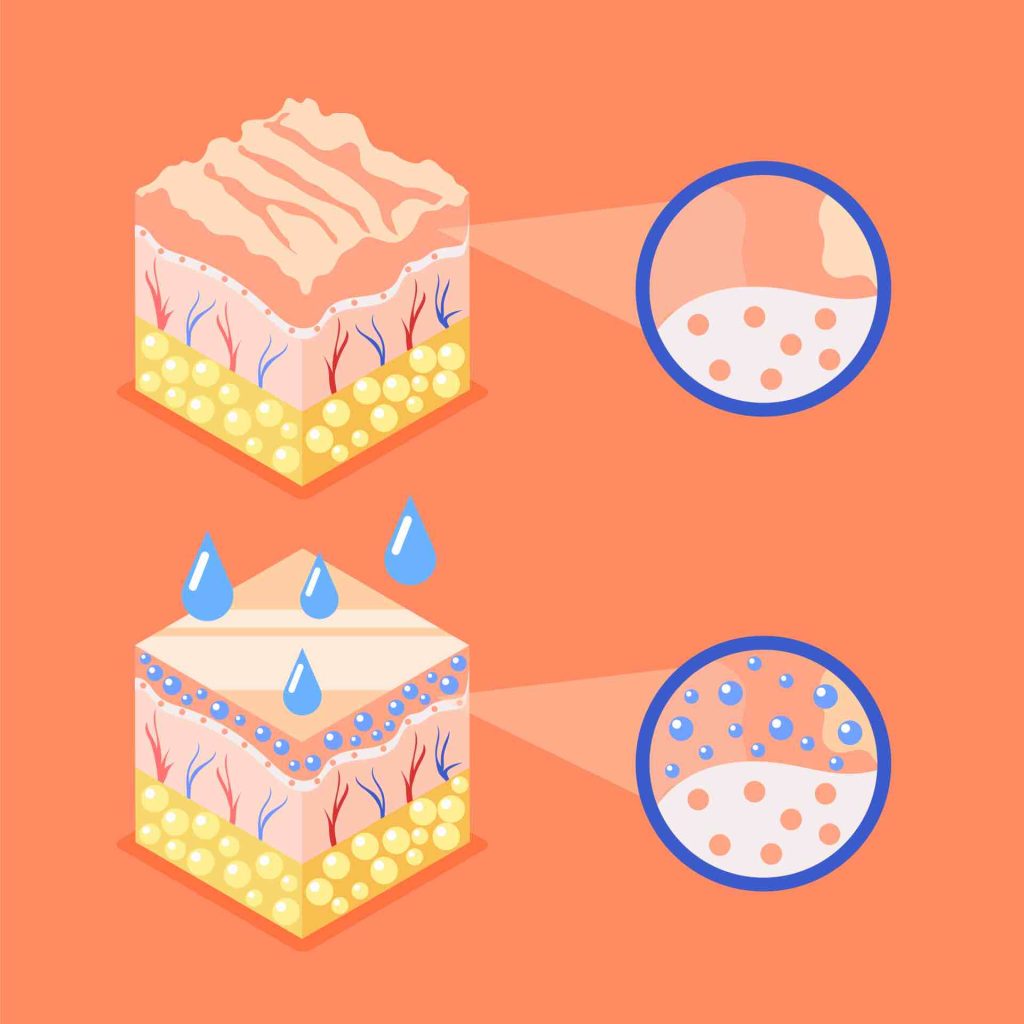
Supporting Skin Barrier Recovery
When the skin barrier becomes weakened, the focus should shift away from aggressive treatments and toward restoring hydration balance and maintaining skin stability.
Instead of overloading the skin with multiple active ingredients, a more effective approach is to support the skin with lightweight, barrier-friendly hydration that helps reduce sensitivity and improve overall resilience under daily environmental stress.
Barrier-supportive serums are typically formulated to:
- help maintain moisture balance
- support hydration retention
- improve skin comfort during environmental exposure
- reduce the impact of dryness and external stress factors
Caused by modern lifestyle factors such as pollution, air-conditioning, and other environmental stressors commonly found in urban living, the skin may gradually experience dehydration and barrier imbalance over time.
A lightweight, barrier-supportive approach is often recommended to help maintain hydration and improve overall skin comfort without overloading the skin.
One example is Vikilux Feel Reverse Serum, a hydration-support serum designed to fit into a simplified skincare routine focused on maintaining moisture balance and supporting skin barrier resilience.
It is generally suitable for individuals seeking daily hydration support in environments where the skin is frequently exposed to environmental stress.
How Long Skin Barrier Recovery Takes
Skin barrier repair is not immediate. The recovery process depends on severity and consistency of care:
- 3–7 days: improved hydration and comfort
- 2–4 weeks: reduced sensitivity and tightness
- 4–8 weeks: improved texture and barrier stability
Long-term consistency is more important than product quantity or complexity.The difference? Responsibility dictates readiness. Knowledge alone does not.
Key Insight
A weak skin barrier is often the hidden reason why skincare routines stop working.
Instead of constantly changing products, the focus should shift to:
- repairing the barrier
- restoring hydration balance
- reducing environmental stress on the skin
Once the barrier begins to recover, skincare products can function effectively again.
Conclusion
When skincare stops working, it is usually not a product failure but a barrier failure.
Understanding and repairing the skin barrier is the foundation of healthy skin. A simplified, consistent routine focused on hydration and protection is more effective than continuously switching products or using stronger actives.
Supporting the skin with appropriate barrier-focused skincare can help restore balance and improve long-term skin resilience.