



In today’s competitive food and beverage industry, food safety is no longer just a compliance requirement—it is a core business risk factor. One single contamination incident, audit failure, or hygiene breach can lead to financial loss, reputational damage, and regulatory penalties.
This is where HACCP-based Food Safety Management Systems (FSMS) become essential.
Understanding HACCP in the Context of Singapore F&B Operations
HACCP (Hazard Analysis and Critical Control Points) is a preventive food safety system widely recognised in Singapore’s food industry compliance framework.
It focuses on identifying and controlling hazards before they affect food safety outcomes.
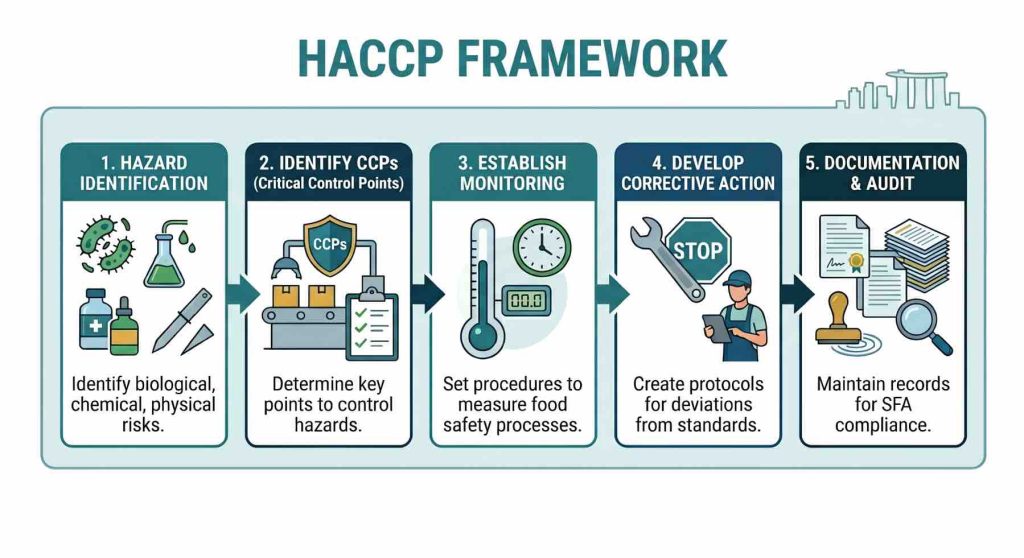
Core HACCP principles include:
- Hazard identification (biological, chemical, physical risks)
- Identification of Critical Control Points (CCPs)
- Monitoring procedures for food safety processes
- Corrective action protocols when deviations occur
- Documentation required for SFA inspections and audits
For F&B supervisors, HACCP provides a structured framework that aligns with Singapore’s regulatory expectations.
Why F&B Businesses Struggle Without Proper Food Safety Systems
Many food establishments still rely heavily on basic hygiene practices rather than structured food safety management. This creates several risks:
- Inconsistent food handling practices among staff
- Lack of proper documentation during inspections
- Higher chance of cross-contamination
- Difficulty passing regulatory audits
- Increased operational liability during incidents
Without a proper system in place, food safety becomes reactive instead of controlled.
How HACCP-Based FSMS Improves Compliance and Reduces Risk
Implementing a structured HACCP-based food safety management system helps F&B businesses align with Singapore’s regulatory expectations.
Key benefits include:
- Better preparedness for SFA inspections and audits
- Standardised food safety procedures across operations
- Improved traceability and documentation compliance
- Early detection of food safety hazards
- Reduced risk of regulatory penalties or license issues
This system-based approach is increasingly seen as essential for sustainable F&B operations in Singapore.
The Role of Proper Food Safety Training in HACCP Implementation
A food safety management system is only effective when it is properly implemented by trained personnel across key operational roles within an F&B business.
In Singapore’s food service industry, HACCP and FSMS responsibilities are typically not limited to one position, but shared across several key roles, including:
- Food Safety Managers, who oversee overall compliance, ensure alignment with SFA requirements, and manage food safety documentation systems
- F&B Supervisors, who are responsible for daily operational control, staff hygiene practices, and on-site food safety enforcement
- HACCP Team Leaders, who coordinate hazard analysis activities, monitor critical control points (CCPs), and maintain HACCP plans
- Personnel involved in FSMS implementation, including kitchen staff and operational staff responsible for executing food safety procedures in real working environments
These roles require more than theoretical knowledge—they must understand how to apply HACCP principles directly in daily food handling, monitoring, and corrective action processes.
Without proper role-specific training, even well-designed food safety systems can fail during real-world implementation, especially during SFA inspections or internal audits.
For professionals working in these roles, structured training such as the Food Safety Course Level 4 provides practical knowledge aligned with supervisory and operational responsibilities in FSMS environments.
Final Insight
In Singapore’s regulated F&B landscape, food safety is not just about hygiene—it is about system-based compliance and operational control.
HACCP-based FSMS helps businesses meet SFA expectations, reduce operational risk, and maintain consistent audit readiness. However, successful implementation depends heavily on trained supervisors who understand both the system and regulatory requirements.